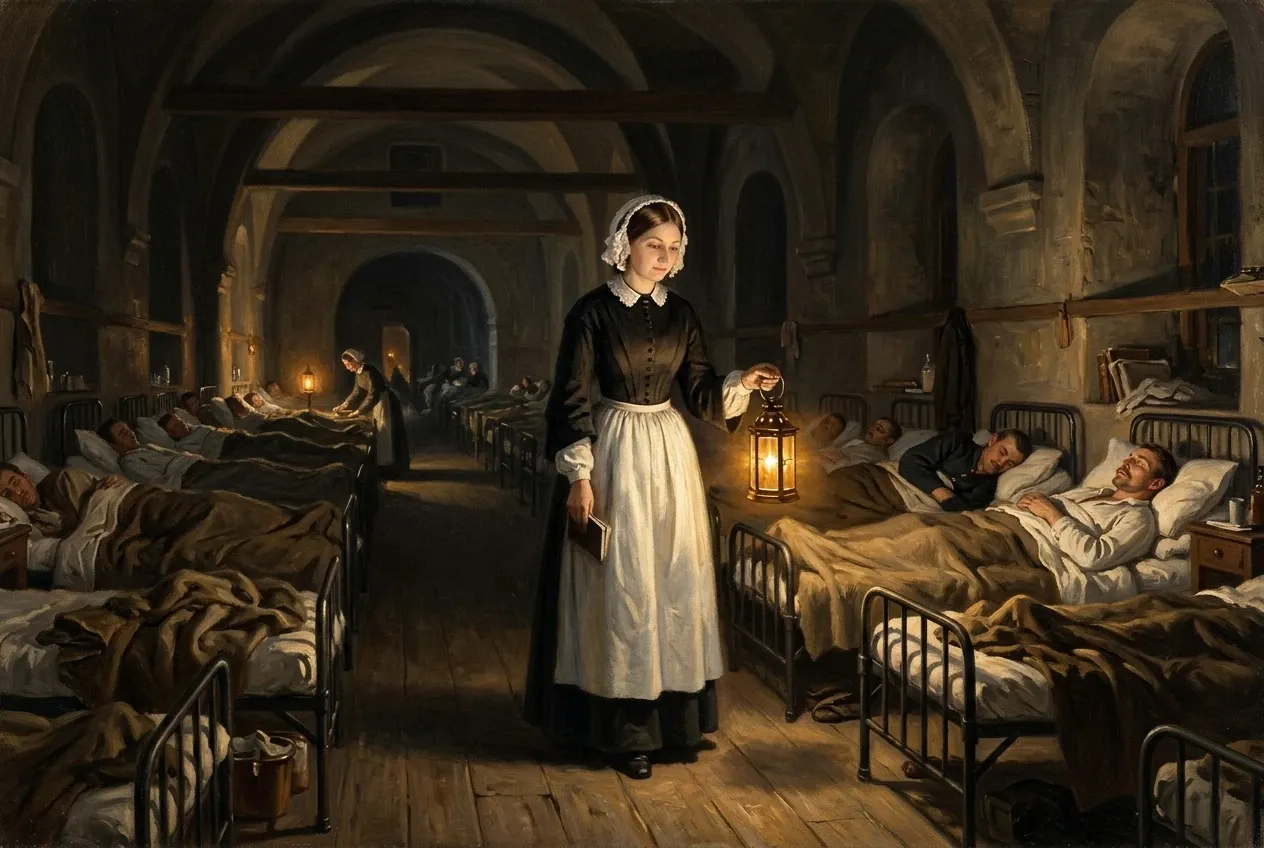
In the autumn of 1854, when reports reached London that more British soldiers were dying of disease in Crimean hospitals than of wounds in battle, a 34-year-old Florence Nightingale sailed to Scutari with 38 volunteer nurses. Within months the death rate at the Barrack Hospital fell from over forty percent to two.
Nightingale combined bedside care with ruthless statistics: she cleaned wards, organised kitchens and laundries, and — back in England — turned her polar-area diagrams into the founding argument of modern hospital design. It is no exaggeration to call her the founder of evidence-based medicine.
Our archive holds two books that let you meet her era from different sides. Florence Nightingale, the Angel of the Crimea tells her story to younger readers — an ideal first read about the war. At Home and on the Battlefield shows the world she stepped into: officers' letters from Crimea, China and Egypt.
See also our overview of five Crimean War books, and browse the shelves for history of medicine, memoirs and the Crimea.